Nosferatu (The Most Perfect of Gothic Vampires)
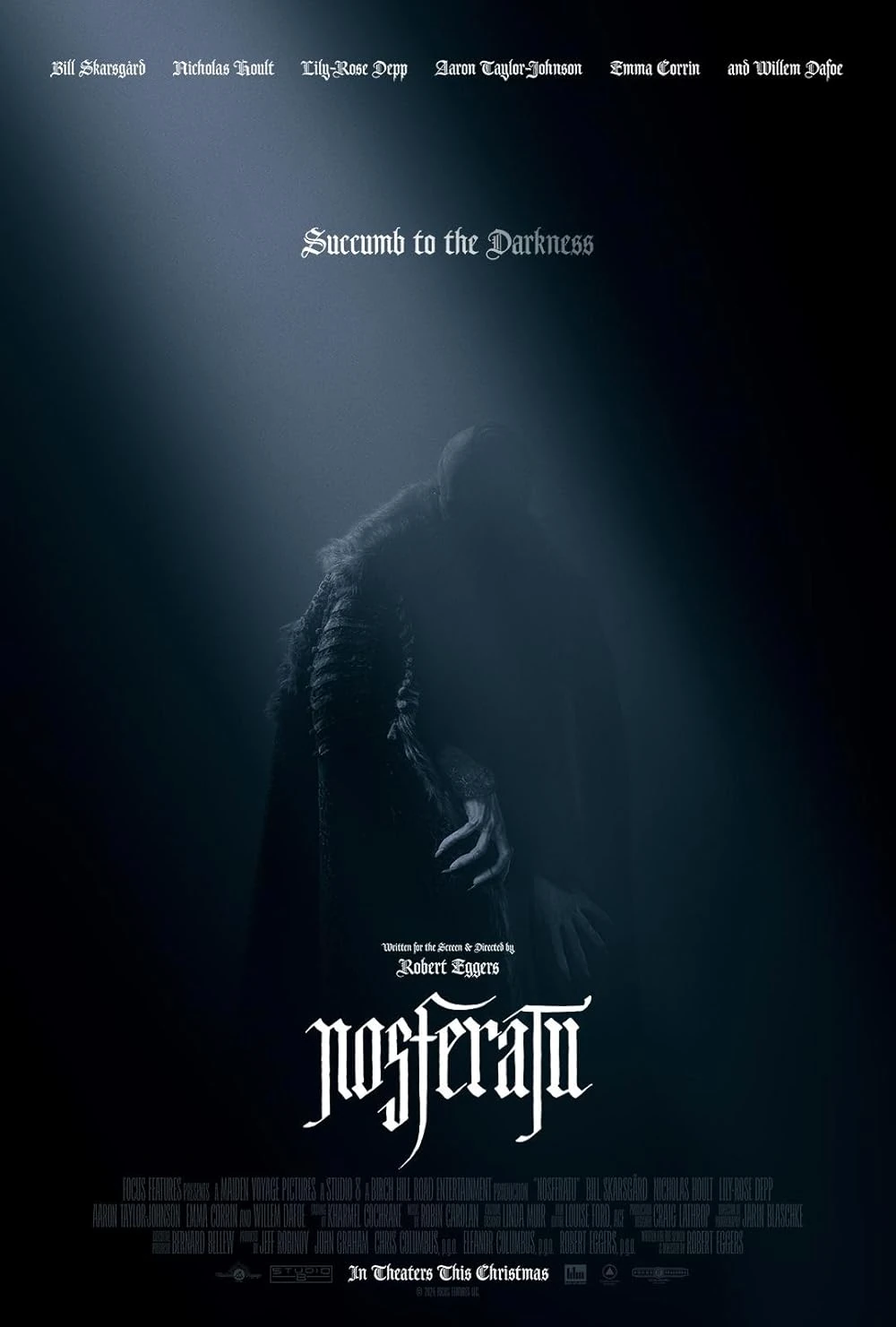
It’s hard to determine a good starting point for something like this. With the amount of press Robert Eggers’ Nosferatu received pre and post-release, what more can be said? You’d think it’d be pretty easy since I teach a damn class on vampires and know all about this shit, but the real goal here needs to be saying something different. Definitely not an easy task. You’re certainly familiar with the 1922 version, which bootlegged Dracula and led to a lawsuit that skyrocketed the Count in popularity for decades after, perhaps the 1979 remake, which has its merits as well, or maybe you just ended up here because you saw the 2024 version and wondered what in the hell it was all about, but, regardless, Nosferatu is easily the best vampire image in film in decades, perhaps ever. I’ll be as simple as possible, without breaking spoiler laws and with just enough mystery to keep you interested, because you should be.
No, Nosferatu is not it’s own story, it’s a bootleg of Dracula, let me reiterate. Eggers, however, in remaking the legendary license stealer, sought to revitalize the vampire as what it was originally, a thing of terror, and disease. Wondering about the mustache thing (which I read at least one stupid article focusing on)? Read the damn book, because it’s in there. For me, knowing as much as I do about this stuff, Eggers’ superior sense of tradition is one of the film’s strongest features, though not the only one by any means. Count Orlok evokes both the character he was inspired by, as well as F. W. Murnau’s original plague-bringer, though now with an blackened, artistic approach that most modern horror directors lack. That sense of dread that sticks in the soul is only the stuff the best of horror can bring, not the retching induced by extreme gore and violence. This is pure, old-school, Gothic fright folks. As Hutter travels to Transylvania to complete what seem simple business dealings to an “eccentric” nobleman hungry for his wife (for reason’s I won’t reveal here), the viewer is entirely drawn into the presence of Nosferatu and its cast. The acting choices couldn’t have been more perfect, with Dafoe’s quasi-Van Helsing stuck in an occult stupor but with just enough sense remaining to battle ancient evils as Depp’s tormented, and sylph-like sexuality pours to the surface in moments as contrary as her states of epileptic shock. But, foremost, Skarsgård’s portrayal of the Count is so grimly foreign he not only captures the feel of the original novel and film, but adds touches of realism that elevate the character to something more unfathomably real. This is not an icon, this is a symbol of dread, disease, and all the horrible things that give the human race persistence. Enough has been said about the mood developed by Eggers to fill a novel itself, but let me leave it at this, Nosferatu is, to date, the greatest rendition of Dracula and perhaps the greatest of all vampire films.
Written by Stanley, Devourer of Souls
Nosferatu (2024, US)
Robert Eggers
5 / 5